Homemade Fly Tying Dubbing
Homemade fly tying dubbing is one of the simplest and most practical ways to reuse leftover materials at your tying bench while creating completely unique blends. Instead of discarding small scraps of fur, guard hairs, and synthetic fibers, you can transform them into custom dubbing that performs beautifully in the water.
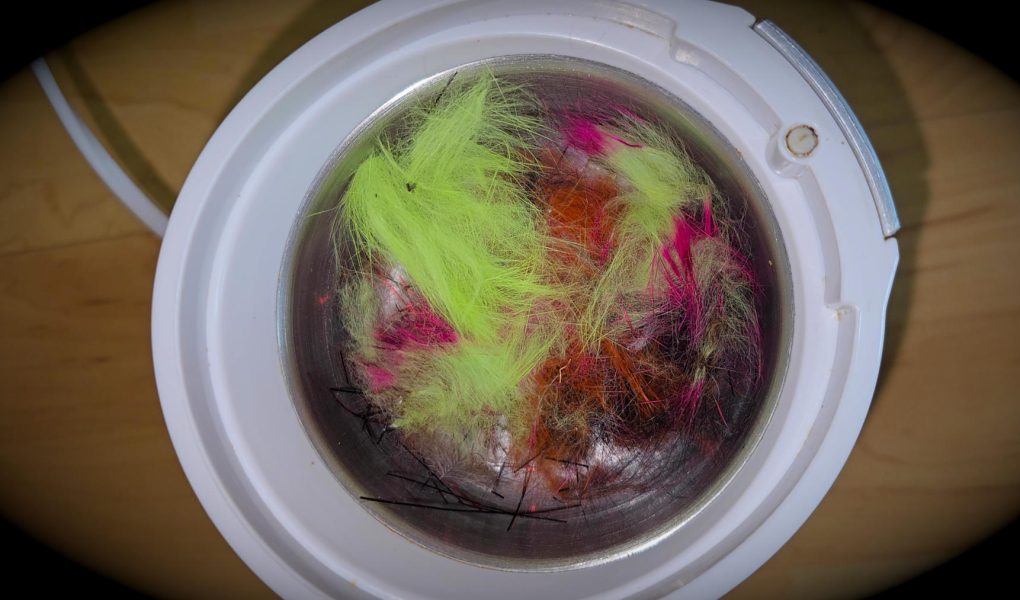
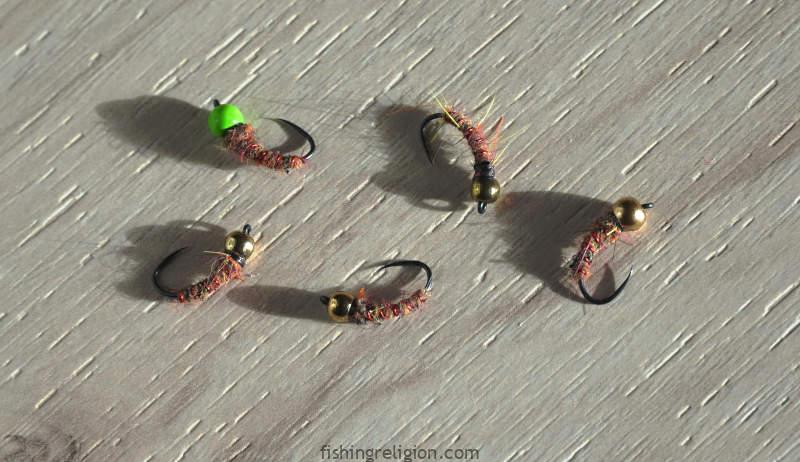
This was my first experiment with homemade fly tying dubbing. The idea was straightforward: collect scraps, grind them carefully, and test the blend on a simple nymph pattern. The result was surprisingly natural, textured, and effective.
Fly tying often produces small amounts of excess material. Over time, these leftovers accumulate. Making homemade fly tying dubbing allows you to turn what would normally be waste into something functional and creative.
Why Make Homemade Fly Tying Dubbing?
There are several benefits to creating your own homemade fly tying dubbing:
- Reduces material waste
- Saves money on pre-packaged dubbing
- Allows full control over color and texture
- Creates unique blends not available in stores
- Adds natural irregularity for a more realistic fly
Commercial dubbing is often perfectly blended and uniform. While that consistency has advantages, natural insects are rarely uniform. Homemade fly tying dubbing often has slight variations in fiber length and color, which can create a more lifelike appearance underwater.
The process also adds a personal element to fly tying. Each blend becomes part of your own tying style.
How to Make Homemade Fly Tying Dubbing
Making homemade fly tying dubbing requires minimal equipment and only a few minutes of preparation.
Step 1 – Collect Scraps
Gather rabbit fur, trimmed dubbing fibers, guard hairs, and small pieces of synthetic material. A mix of natural and synthetic fibers usually produces the best results.
Step 2 – Use a Small Coffee Grinder
Place the scraps into a clean coffee grinder. Avoid filling it too much; small batches work best.
Step 3 – Pulse the Grinder
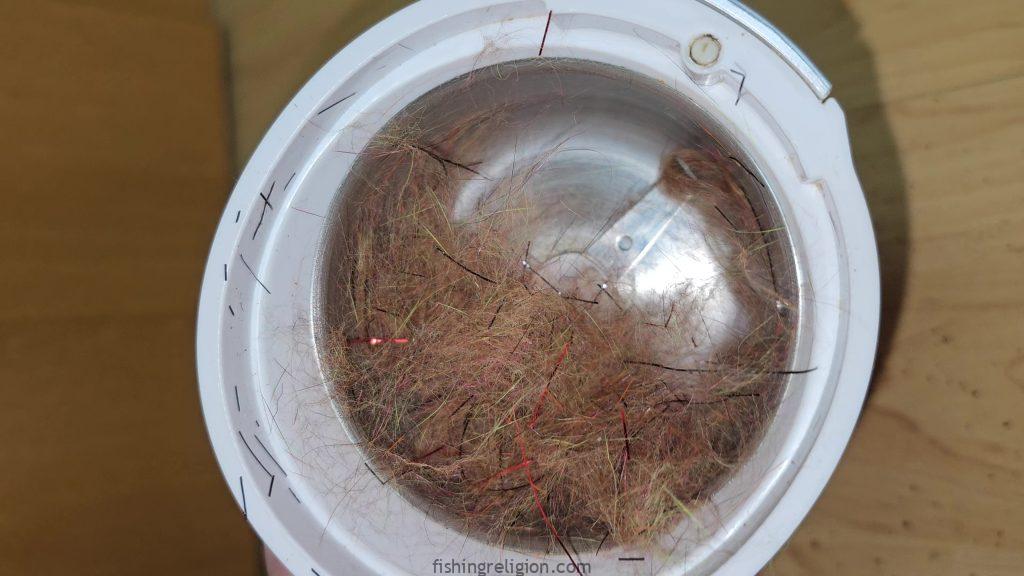
Use short pulses rather than continuous grinding. The goal is to separate and blend fibers, not to pulverize them into dust.
Step 4 – Check Texture
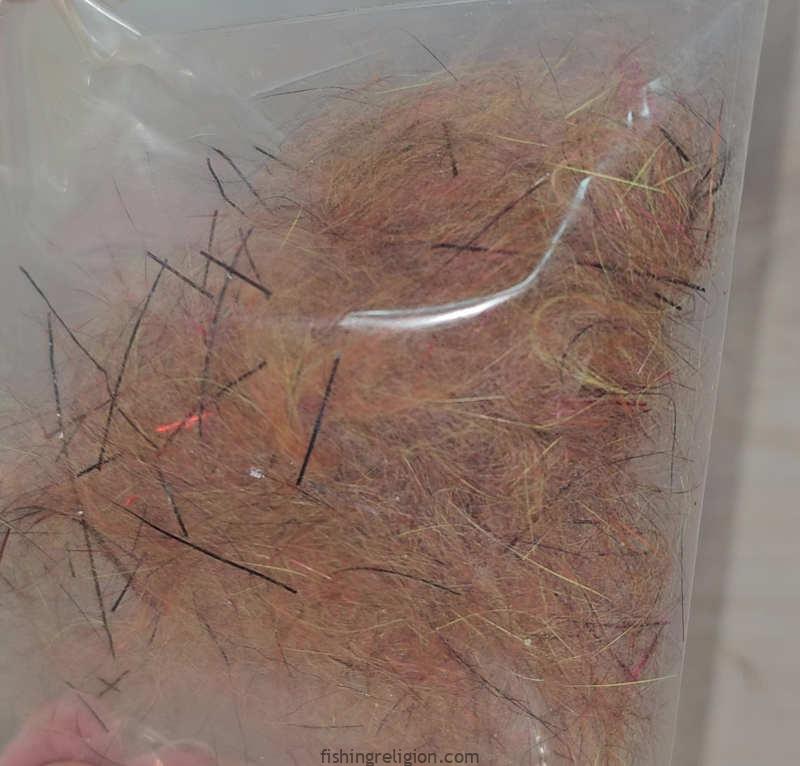
The finished homemade fly tying dubbing should feel light and airy. You want fibers that can grip the thread easily without becoming overly compressed.
Step 5 – Store Your Blend
Place the dubbing into a small labeled container. Over time, you can create multiple variations for different fishing conditions.

Tips for Making Better Homemade Dubbing
If you want to try it yourself:
- Use short grinding pulses
- Mix natural and synthetic fibers
- Avoid overloading the grinder
- Separate longer guard hairs if you want a smoother body
- Store blends in small labeled containers
You can even create different blends for:
- Clear water (natural tones)
- Slightly colored water (add subtle flash)
- High water (brighter trigger fibers)
Fly Tying the Nymph
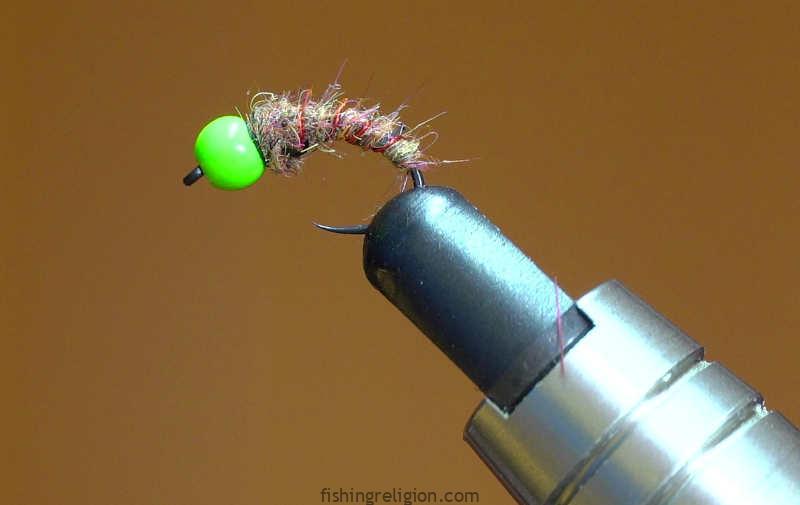
To test the dubbing, I tied a simple nymph using the following materials:
Hook: Hends BL599
Bead: 3.2 mm
Thread: UNI 8/0 Iron Gray
Wire: Sybai 0.2 mm
Wax: Hends Dubbing Wax
Dubbing: Homemade (fly tying scraps)
Head cement: Traun River
The dubbing wrapped easily on the thread and created a slightly buggy body — exactly what you want in a nymph.
Final Thoughts
Making homemade dubbing for the first time felt simple — almost too simple. But that’s often how the best fly tying ideas begin.
There is something rewarding about creating a fly from materials that might otherwise be discarded. It adds a personal layer to the tying process. Every blend is slightly different. Every nymph carries its own character.
This was just the first experiment — but definitely not the last.
Fly tying is not only about perfection.
It’s about process.
Texture.
Curiosity.
And sometimes, it starts with scraps.
Affiliate Disclosure
This website contains affiliate links. If you click on certain links and make a purchase, I may receive a commission at no additional cost to you.
I only promote products and services that I genuinely believe provide value. Any compensation received does not influence the content, topics, or opinions expressed on this blog.
As an AliExpress, Amazon UK, and eBay Partner, I may earn from qualifying purchases.
This disclosure is provided in accordance with applicable advertising and consumer protection regulations.


